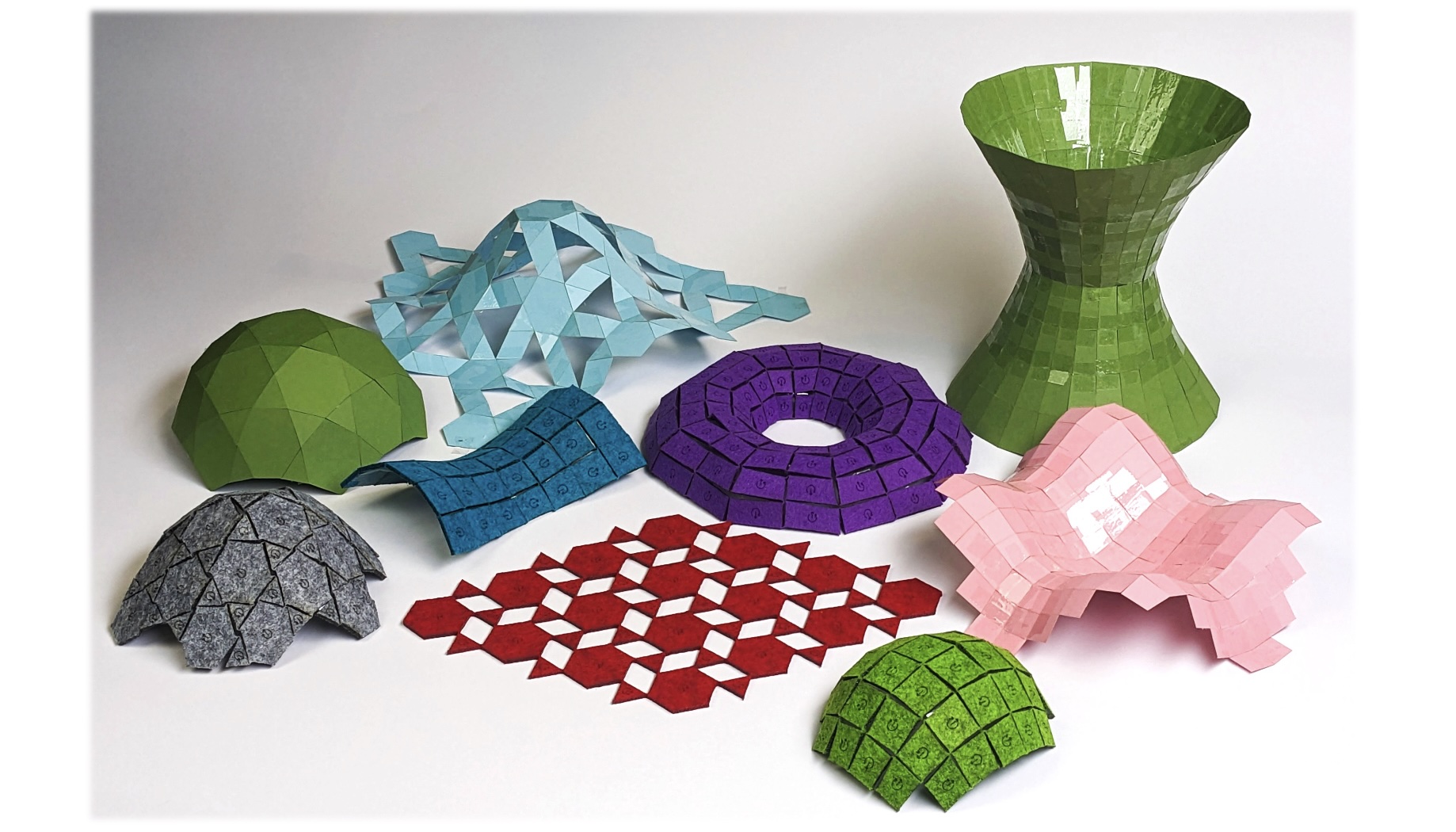
Reconfigurable Hinged Kirigami Tessellations
The paper presents a computational framework for designing hinged kirigami patterns that can be optimized to approximate a target 3D surface upon deployment.
The paper presents a computational framework for designing hinged kirigami patterns that can be optimized to approximate a target 3D surface upon deployment.
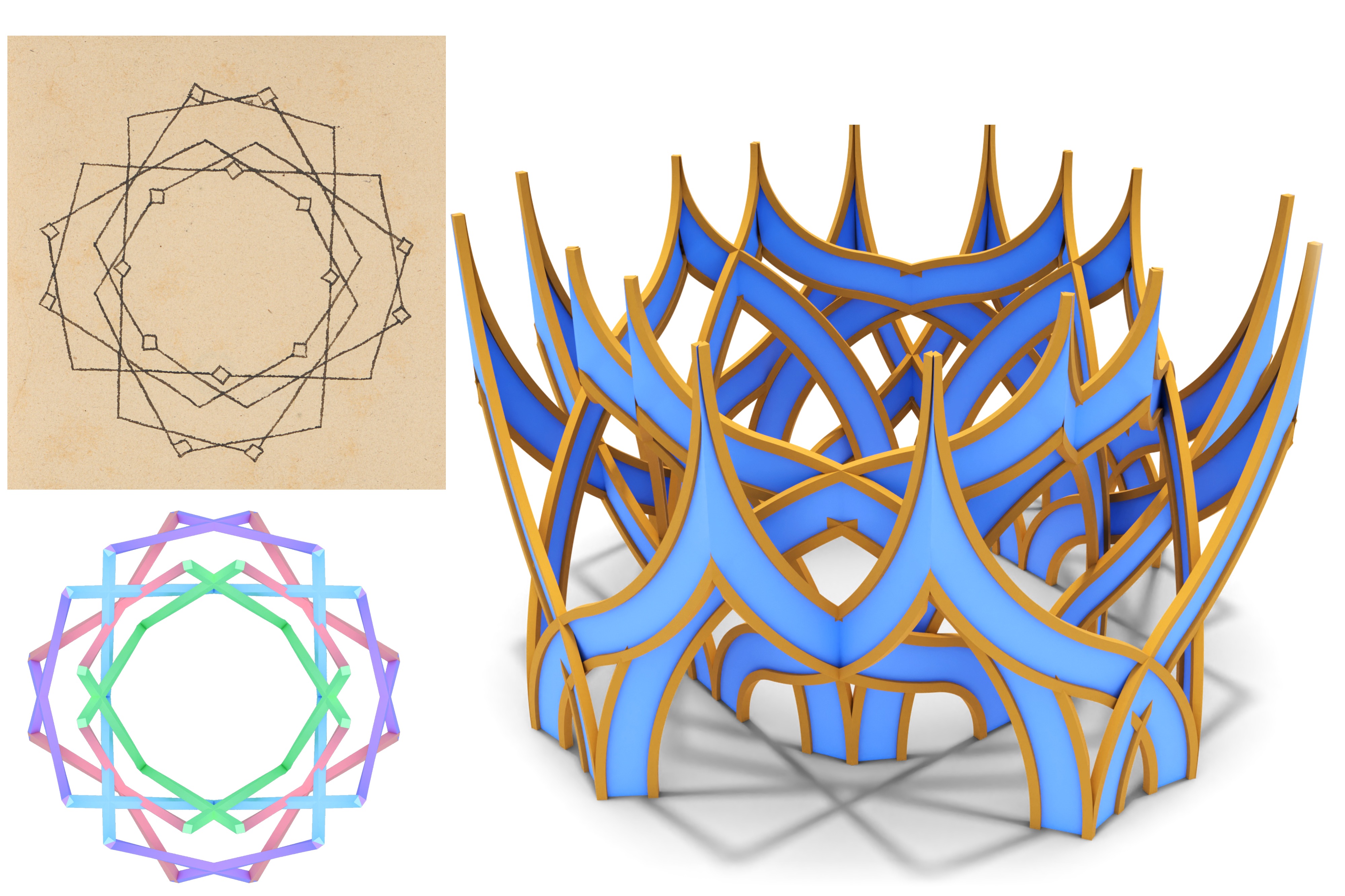
This work presents a simple yet powerful geometric framework to reconstruct complex 3D Gothic microarchitecture structures from 2D historical top-view drawings. The framework also provides a design space for such structures via an interactive UI.
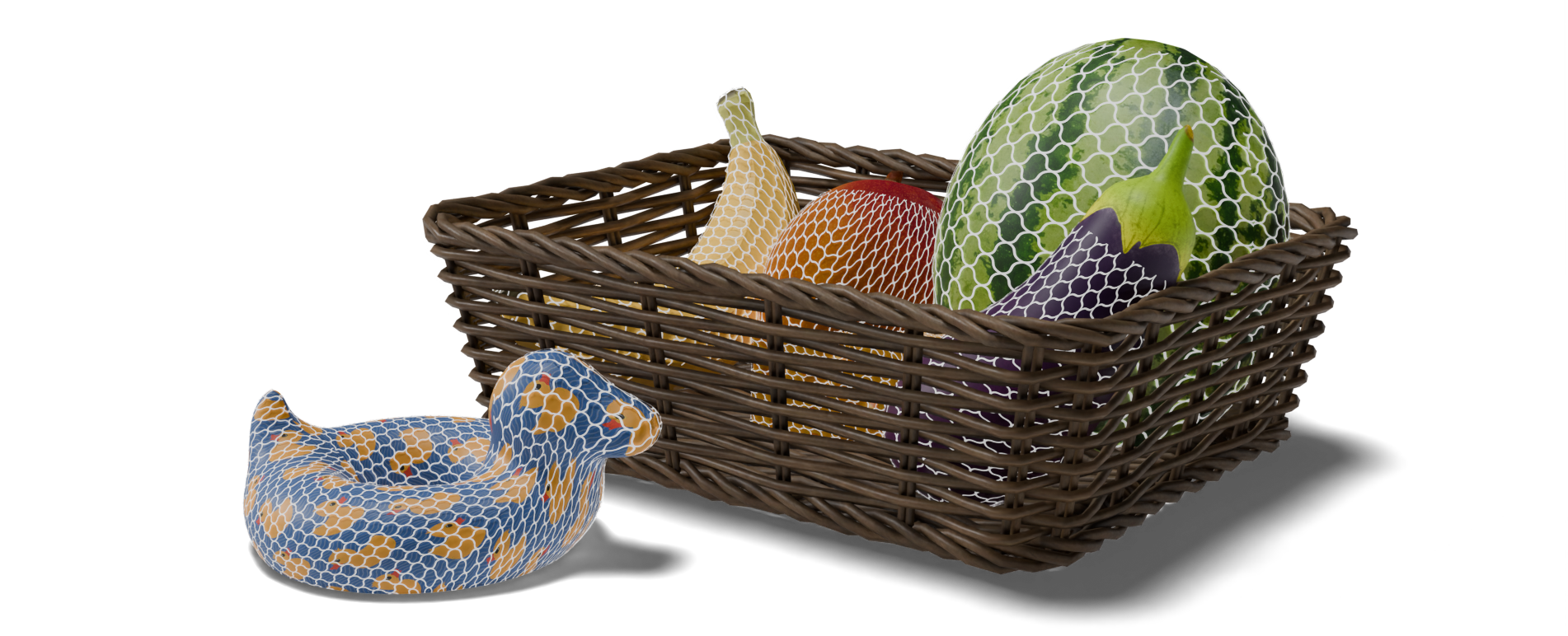
The paper proposes a new surface parameterization method that models woven fabrics more accurately by using Chebyshev-net-based distortion energy, which accounts for anisotropic stretch and shear.
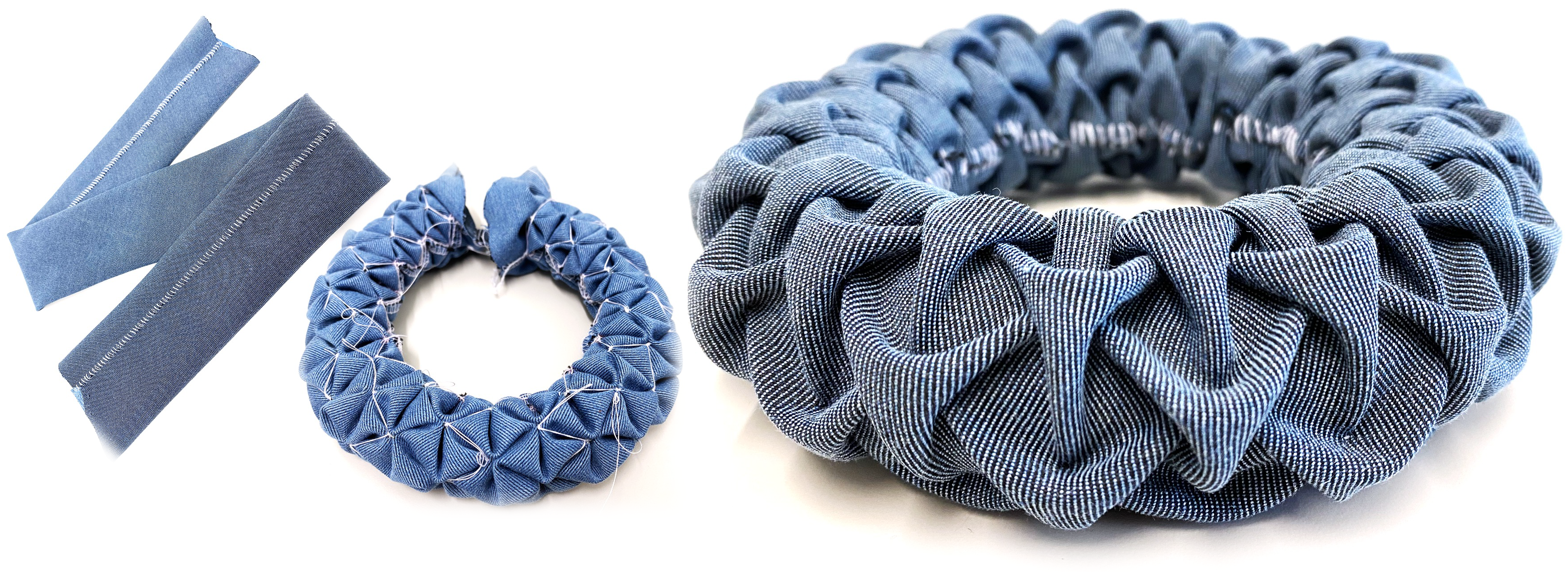
The paper introduces a method for utilizing an embroidery technique called smocking to realize freeform surfaces from a flat piece of fabric. By combining directional field computation and continuous planar graph optimization, our algorithm outputs a stitching pattern that generates an approximation of the target shape upon stitching.
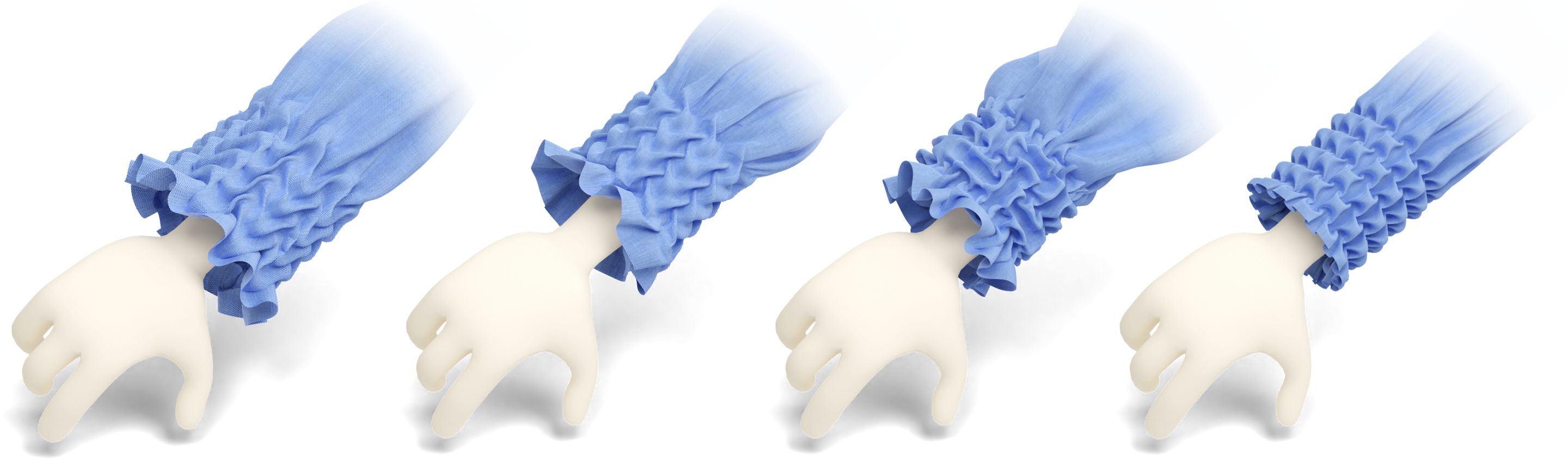
The paper presents a method for digitally previewing a smocking pattern design by formulating smocking as a graph embedding and shape deformation problem.
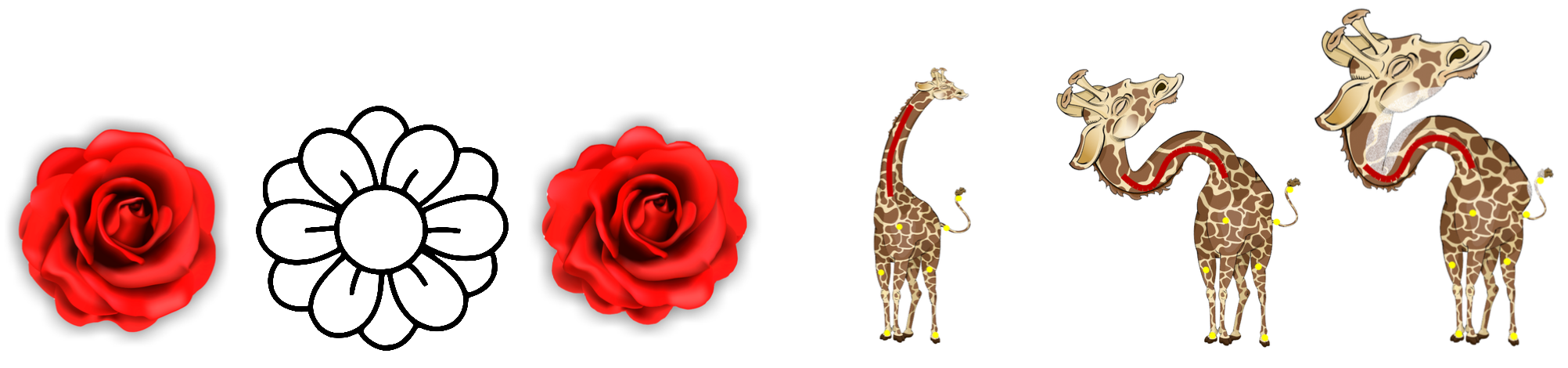
The paper introduces an alternating minimization algorithm utilizing the Cauchy-Green complex coordinates to efficiently compute a conformal map between planar domains with initial global alignment.
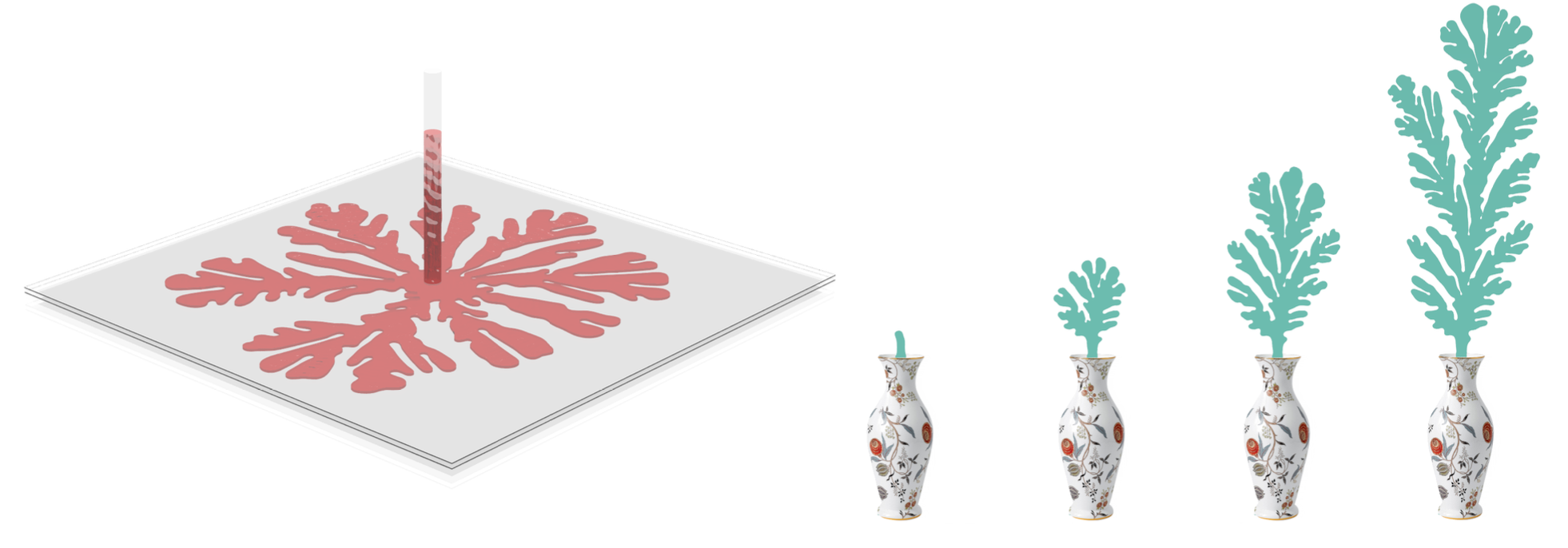
The paper explores Hele-Shaw flow, a slow viscous liquid flow between parallel plates, proposing an efficient simulation method using a complex-variable formulation of generalized barycentric coordinates, enabling interactive user control and extending applicability to the exterior domain for simulating two-phase flow and diverse patterns.
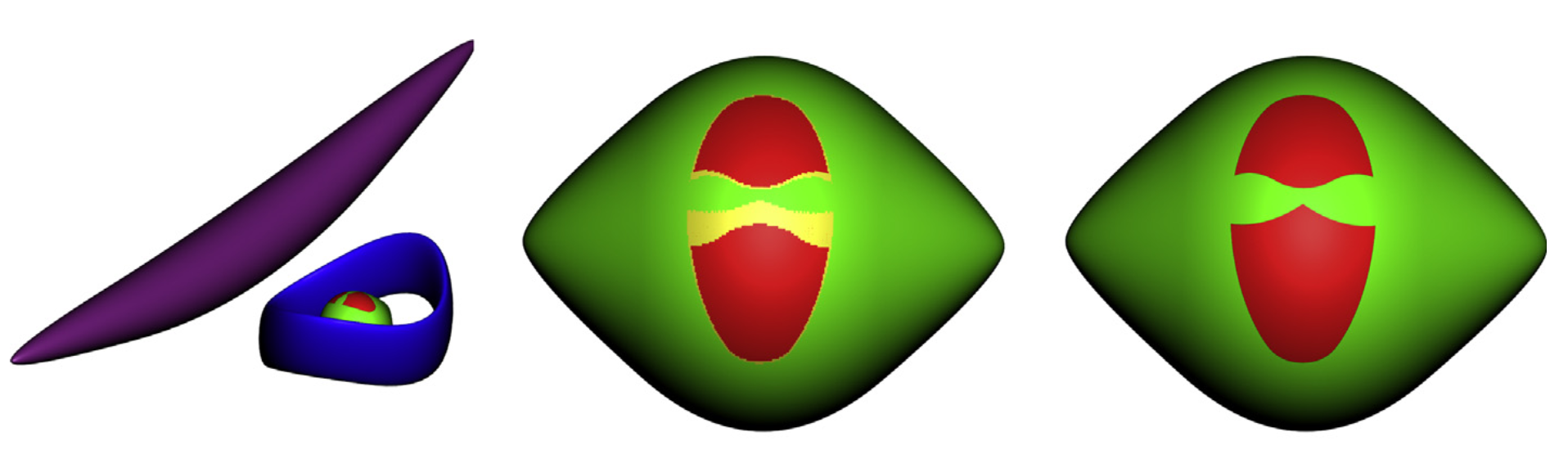
The paper presents an algoirthm for computing the visual hull of a parameteric surface in an arrangement of additional occluding surfaces.